A resistor is a basic yet vital electronic component that limits or controls the flow of electric current in a circuit. It's a passive device that plays a key role in managing voltage, current, and signal conditions across various electrical and electronic systems.
Whether you're building a simple LED circuit or designing complex analog systems, understanding resistors is fundamental to electronics. They are one of the most common components you'll encounter, appearing in virtually every electronic device from smartphones to industrial control systems.
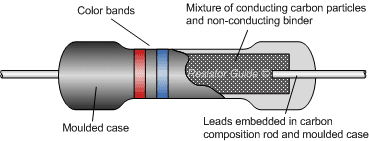
A resistor is a passive component used to oppose or limit current flow in an electrical circuit. The core principle governing resistor behavior is Ohm's Law:
Ohm's Law
V = I × R
V (Voltage)
Measured in Volts (V)
I (Current)
Measured in Amperes (A)
R (Resistance)
Measured in Ohms (Ω)
Resistors dissipate electrical energy as heat and are used for multiple purposes including:
- Voltage Division: Splitting voltage across components
- Biasing: Setting operating points for transistors and other active devices
- Signal Conditioning: Adjusting signal levels and impedance
- Circuit Protection: Limiting current to protect sensitive components
Resistors come in various types, each designed for specific applications based on their construction, performance characteristics, and power handling capabilities.
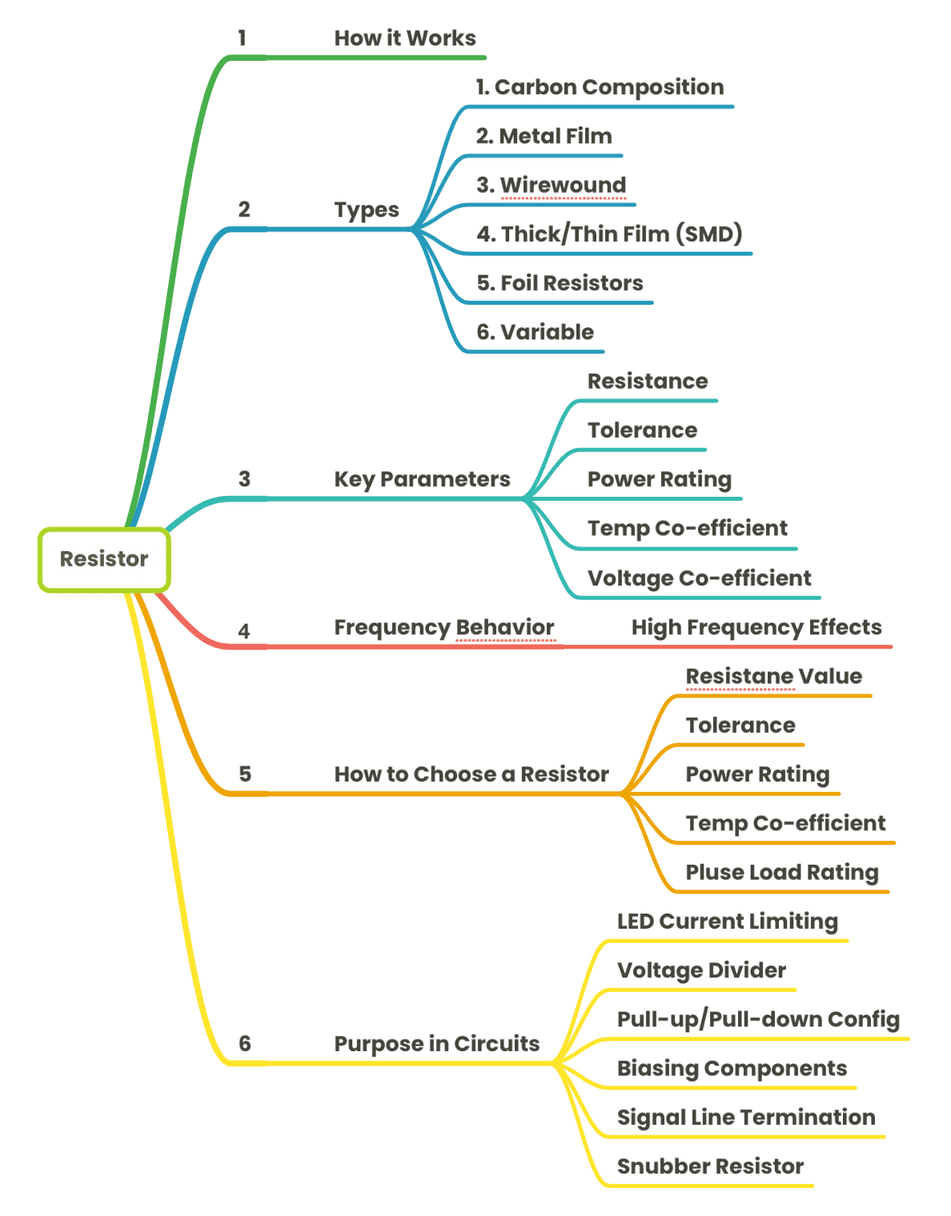
1. Carbon Composition Resistors
Structure: Mixture of carbon particles and binder material
Pros: Low cost, good for handling high-energy pulses
Cons: Poor tolerance, high noise levels
Applications: General purpose circuits, surge protection
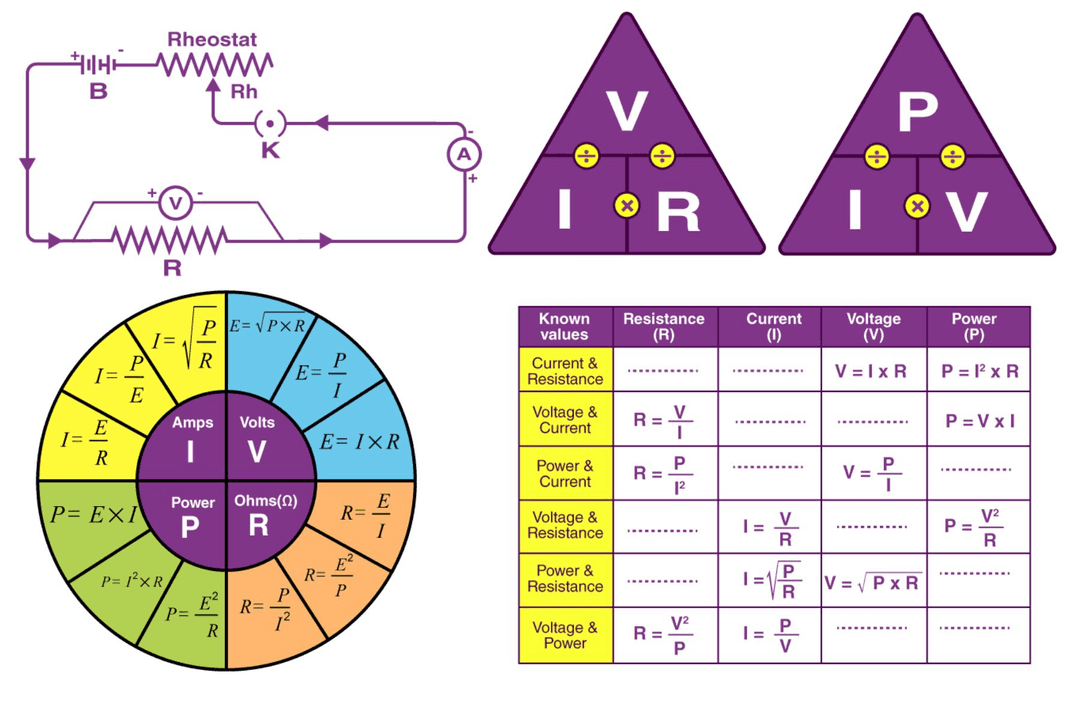
2. Metal Film Resistors
Structure: Vacuum-deposited metal layer on ceramic core
Pros: High accuracy, low noise, excellent temperature stability
Cons: More expensive than carbon composition
Applications: Precision analog circuits, measurement equipment
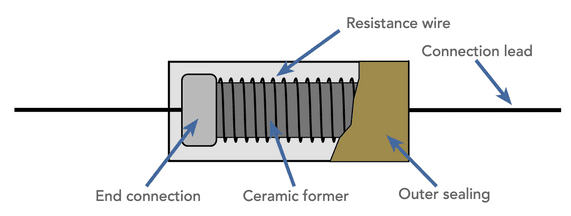
3. Wirewound Resistors
Structure: Metal wire wound around a ceramic or fiberglass core
Pros: High power handling, very stable
Cons: Inductive at high frequencies
Applications: Power supplies, motor drives, high-current applications
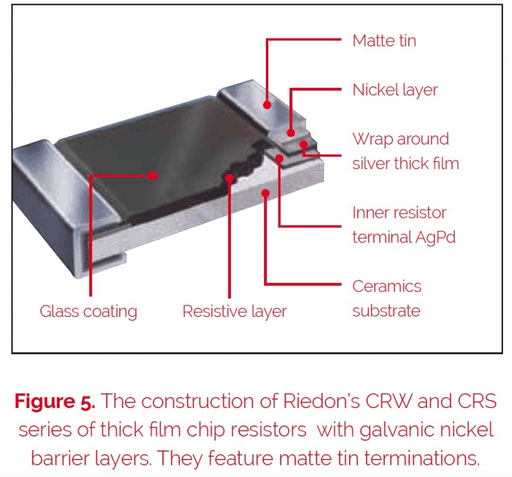
4. Thick/Thin Film SMD Resistors
Structure: Printed resistive material on ceramic substrate
Pros: Compact size, cost-effective for mass production
Cons: Limited power rating
Applications: Consumer electronics, high-density PCBs, mobile devices
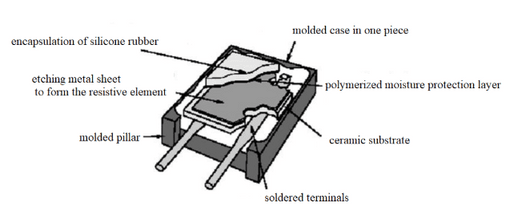
5. Foil Resistors
Structure: Etched metal foil on ceramic substrate
Pros: Extremely precise, very low temperature coefficient, minimal drift
Cons: Expensive
Applications: Precision instrumentation, medical devices, aerospace
6. Variable Resistors (Potentiometers)
Structure: Movable contact on resistive track
Pros: Adjustable resistance value
Cons: Subject to mechanical wear
Applications: User-adjustable settings (volume controls, brightness), calibration circuits
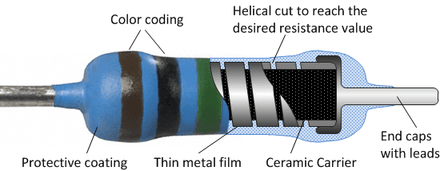
When selecting and using resistors, several key parameters must be considered to ensure proper circuit operation and reliability.
Resistance Value (R)
The fundamental property measured in Ohms (Ω). Common values are standardized in E12, E24, E96, and E192 series.
Tolerance
Maximum deviation from nominal value (±1%, ±5%, ±10%, etc.). Precision applications require tighter tolerances.
Power Rating
Maximum power dissipation (1/8W, 1/4W, 1/2W, 1W, etc.). Must not exceed this value to prevent overheating.
Temperature Coefficient
Change in resistance per degree Celsius (ppm/°C). Lower values indicate better stability across temperature ranges.
Voltage Rating
Maximum voltage that can be applied. Exceeding this can cause arcing or breakdown.
Noise
Unwanted voltage fluctuations. Critical in low-level signal applications like audio and sensor interfaces.
Important Derived Values:
- Power Dissipation: P = I²R = V²/R
- Current: I = V/R
- Voltage Drop: V = IR
Resistors behave ideally only at low frequencies. At high frequencies, parasitic capacitance and inductance become significant, affecting circuit performance.
High Frequency Effects
At high frequencies, resistors exhibit:
- Parasitic Capacitance: Between leads and body, creating unwanted capacitive coupling
- Parasitic Inductance: In wirewound and through-hole resistors, especially with long leads
- Skin Effect: Current concentration at conductor surface at high frequencies
Rule of Thumb:
Use non-inductive resistors or surface mount resistors for RF and GHz applications. Metal film SMD resistors typically perform best at high frequencies due to minimal parasitic effects.
Frequency Guidelines
- DC to 100 kHz: Most resistor types work well
- 100 kHz to 10 MHz: Prefer metal film or SMD resistors
- 10 MHz to 1 GHz: Use SMD resistors with short leads
- Above 1 GHz: Special RF resistors with minimal parasitics
Selecting the right resistor involves considering multiple factors to ensure reliable circuit operation and longevity.
Selection Criteria:
1. Calculate Required Resistance
Use Ohm's Law (R = V/I) to determine the resistance value needed for your application.
2. Determine Power Rating
Calculate power dissipation (P = I²R or P = V²/R). Choose a resistor with power rating at least 2× the calculated value for safety margin.
3. Select Appropriate Tolerance
±5% for general applications, ±1% or better for precision circuits, measurement equipment, and filter designs.
4. Consider Temperature Range
Check temperature coefficient (ppm/°C) if the circuit will experience temperature variations. Metal film resistors offer excellent temperature stability.
5. Evaluate Package Type
Through-hole (THT) for prototyping and high power, SMD for production and high-density designs.
6. Check Frequency Response
For high-frequency applications, use low-parasitic SMD resistors or specialized RF resistors.
Derating Rule:
Reduce power rating by 50% for every 25°C above 70°C ambient temperature. This prevents thermal damage and ensures long-term reliability.
Resistors serve critical functions in numerous circuit applications. Here are five essential real-world examples with detailed calculations and design considerations.
1. Voltage Divider for ADC Input
Application: Scaling high voltages (like battery voltage) down to safe levels for microcontroller ADC inputs.
Example: Monitoring 12V Battery
Given:
- Max battery voltage = 12V
- Desired ADC input = ≤3.3V
- Choose R1 = 6.8kΩ
Formula:
V_out = V_in × (R2 / (R1 + R2))
Calculation:
3.3V = 12V × (R2 / (6.8kΩ + R2))
R2 ≈ 2.58kΩ → Use standard value: 2.2kΩ
Result:
V_out = 12V × (2.2kΩ / 9kΩ) ≈ 2.93V ✓
Design Tips:
- • Ensure scaled voltage stays within ADC limits with margin for variations
- • Use precision resistors (1% or better) for accurate measurements
- • Add a low-pass filter capacitor parallel to R2 to reduce ADC noise
- • Verify ADC input impedance is much higher than the divider resistance
2. Pull-up Resistor on I²C Line
Pull-up resistors are essential for I²C bus operation. The I²C protocol uses an open-drain configuration where devices can only pull lines LOW—resistors are needed to pull them HIGH.
Why Pull-ups Are Needed:
- • I²C is open-drain: devices can pull LOW but not drive HIGH
- • Without pull-ups, lines would float with undefined logic levels
- • Pull-ups define the idle (HIGH) state and enable proper transitions
I²C Speed vs. Pull-up Values
| Speed Mode | Max Rise Time | Typical Pull-up |
|---|---|---|
| Standard (100 kHz) | 1000 ns | 4.7kΩ to 10kΩ |
| Fast (400 kHz) | 300 ns | 2.2kΩ to 4.7kΩ |
| Fast+ (1 MHz) | 120 ns | 1kΩ to 2.2kΩ |
Calculation Example
Given:
- V_CC = 3.3V
- Bus capacitance ≈ 100pF
- I²C speed = 100kHz (Standard mode)
- Recommended pull-up = 4.7kΩ
Check Rise Time:
τ = R × C = 4.7kΩ × 100pF = 470ns
Rise time ≈ 2.2τ = 1034ns (within 1000ns spec ✓)
Design Considerations:
- • Lower resistors = faster rise times but higher current consumption
- • Higher resistors = lower current but slower rise times
- • Maximum sink current per I²C spec is 3mA
- • For 3.3V systems, minimum recommended: R ≥ 1.1kΩ
3. Op-Amp Feedback Resistor
The feedback resistor is critical in operational amplifier circuits, controlling gain, bandwidth, and stability. It regulates how much of the output signal returns to the input.
Non-Inverting Amplifier
Gain Formula:
A_v = 1 + (R_f / R_in)
Example: R_f = 10kΩ, R_in = 1kΩ
Gain = 1 + (10k/1k) = 11
Inverting Amplifier
Gain Formula:
A_v = -(R_f / R_in)
Example: R_f = 10kΩ, R_in = 2kΩ
Gain = -(10k/2k) = -5
(Negative = 180° phase shift)
Design Example: Gain = 10 Non-Inverting
Target: Voltage gain of 10×
Formula: 10 = 1 + (R_f / R_in)
Solve: R_f / R_in = 9
Choose: R_in = 1kΩ, then R_f = 9kΩ
Application: Audio preamps, sensor signal conditioning
Practical Design Tips:
- • Typical range: R_f = 1kΩ to 100kΩ
- • Use precision resistors (1% or 0.1%) for stable, accurate gain
- • Lower values (1-10kΩ) for high-speed op-amps to minimize parasitic effects
- • Higher values increase thermal noise and input offset errors
4. Signal Line Termination
Signal line termination prevents reflections in high-speed or long PCB traces, especially when trace length is electrically significant relative to the signal wavelength.
Why Terminate Signal Lines?
Without proper termination, signals reflect back from the end of the trace, causing:
- • Data errors and timing violations
- • Signal integrity problems (ringing, overshoot)
- • Increased electromagnetic interference (EMI)
- • Reduced noise margins
Common Termination Types
| Type | Configuration | Use Case |
|---|---|---|
| Series | Resistor near driver | Point-to-point, short traces |
| Parallel | To ground/Vcc at receiver | DDR, SDRAM, clock lines |
| Thevenin | Pull-up/pull-down combo | Bidirectional buses |
| AC | Resistor + capacitor | RF, clock lines |
Series Termination Example
Given:
- Trace impedance: Z₀ = 50Ω
- Driver output impedance: 20Ω
Calculate:
R_series = Z₀ - Z_driver = 50Ω - 20Ω = 30Ω
Result: Place 30Ω resistor close to the driver
Typical Termination Values
- • Single-ended (TTL/CMOS): 33Ω – 100Ω
- • Differential (Ethernet, USB): 49.9Ω – 100Ω per line
- • High-speed clocks: 33Ω – 50Ω
- • RF lines (50Ω traces): 50Ω matched termination
Best Practices:
- • Match termination resistor to trace impedance
- • Place series resistors near the driver
- • For differential signals, terminate at receiver with differential impedance (typically 100Ω)
- • Use simulation tools (SI/PI analysis) for critical high-speed designs
5. Snubber Resistor in Relay Driver
When driving inductive loads like relays, motors, or solenoids, turning off the switch generates high-voltage spikes due to the collapsing magnetic field. A snubber circuit absorbs or dissipates this energy to protect switching devices.
Why Use a Snubber?
- • Limits voltage spikes across switching transistors/MOSFETs
- • Protects devices from inductive kickback damage
- • Reduces electromagnetic interference (EMI)
- • Prevents arcing across switch contacts
- • Improves relay life and system reliability
Common Configurations
1. Flyback Diode (Most Common):
Simple diode across coil provides current path when switch opens. Effective and minimal power loss.
2. RC Snubber:
Resistor and capacitor in series across the relay coil. Faster switching than diode alone.
3. RCD Snubber:
Adds diode for more precise energy dissipation and faster response.
RC Snubber Calculation
Given:
- Relay coil inductance: L = 1mH
- Operating current: I = 0.5A
- Target time constant: τ = 10μs
Step 1: Choose capacitor C = 100nF
Step 2: Calculate resistor
R = τ / C = 10μs / 100nF = 100Ω
Result: Use 100Ω, 0.5W resistor + 100nF capacitor in series across relay coil
Snubber vs. Diode Comparison
| Protection Type | Voltage Suppression | Switching Speed | Power Loss |
|---|---|---|---|
| Flyback Diode | Very effective | Slower | Minimal |
| RC Snubber | Effective | Faster | Moderate |
Important Notes:
- • A flyback diode is often sufficient for basic protection
- • RC snubbers are used for faster switching or reduced contact bounce
- • Snubbers increase power loss—proper sizing is essential
- • For high-speed or sensitive circuits, simulate switching behavior
- • Use fast recovery diodes for best performance
Resistors are fundamental building blocks of electronic circuits, essential for controlling current, dividing voltages, and protecting sensitive components. Understanding their characteristics, types, and applications is crucial for successful circuit design.
From simple LED current limiting to complex analog signal processing, resistors play critical roles in virtually every electronic system. The key to effective resistor selection lies in considering all relevant parameters: resistance value, power rating, tolerance, temperature coefficient, and frequency behavior.
The real-world applications covered in this guide—voltage dividers for ADC inputs, I²C pull-up resistors, op-amp feedback networks, signal line termination, and snubber circuits—represent essential design patterns you'll encounter repeatedly in electronics engineering. Master these fundamentals, and you'll have a solid foundation for tackling more complex circuit design challenges.
As you continue your journey in electronics, remember that proper resistor selection and placement can make the difference between a circuit that works reliably and one that fails under real-world conditions. Always calculate power dissipation, consider derating for temperature, and choose quality components appropriate for your application's requirements.
- Ohm's Law (V = IR) is the fundamental relationship governing resistor behavior
- Six main types of resistors serve different applications: carbon composition, metal film, wirewound, SMD, foil, and variable
- Key parameters include resistance value, tolerance, power rating, temperature coefficient, and frequency response
- Power dissipation must be calculated (P = I²R or V²/R) and derated for temperature and safety
- High-frequency effects require special consideration—use SMD resistors for RF applications
- Voltage dividers scale voltages for ADC inputs and signal conditioning
- Pull-up resistors are essential for I²C and open-drain buses
- Feedback resistors control op-amp gain in precision analog circuits
- Termination resistors prevent reflections in high-speed digital signals
- Snubber circuits protect switches from inductive kickback when driving relays

Zest Academy
Master Engineering Fundamentals & Ace Interviews. Structured learning paths for engineering students with expert-crafted courses.
Expert Learning Paths
Curated courses designed by industry experts
Comprehensive Resources
In-depth articles and tutorials for all levels
Active Community
Join thousands of learners on their journey
Ready to Level Up Your Skills?
Explore our comprehensive courses and learning resources
© 2026 Zest Academy. All rights reserved.